Bag Materials & Customization
5 Costly Mistakes to Avoid When Ordering Custom Non-Woven Bags
Avoid costly mistakes when ordering custom non-woven bags. Learn how to confirm dimensions, handle specifications, logo color, print areas and reinforcement before production.
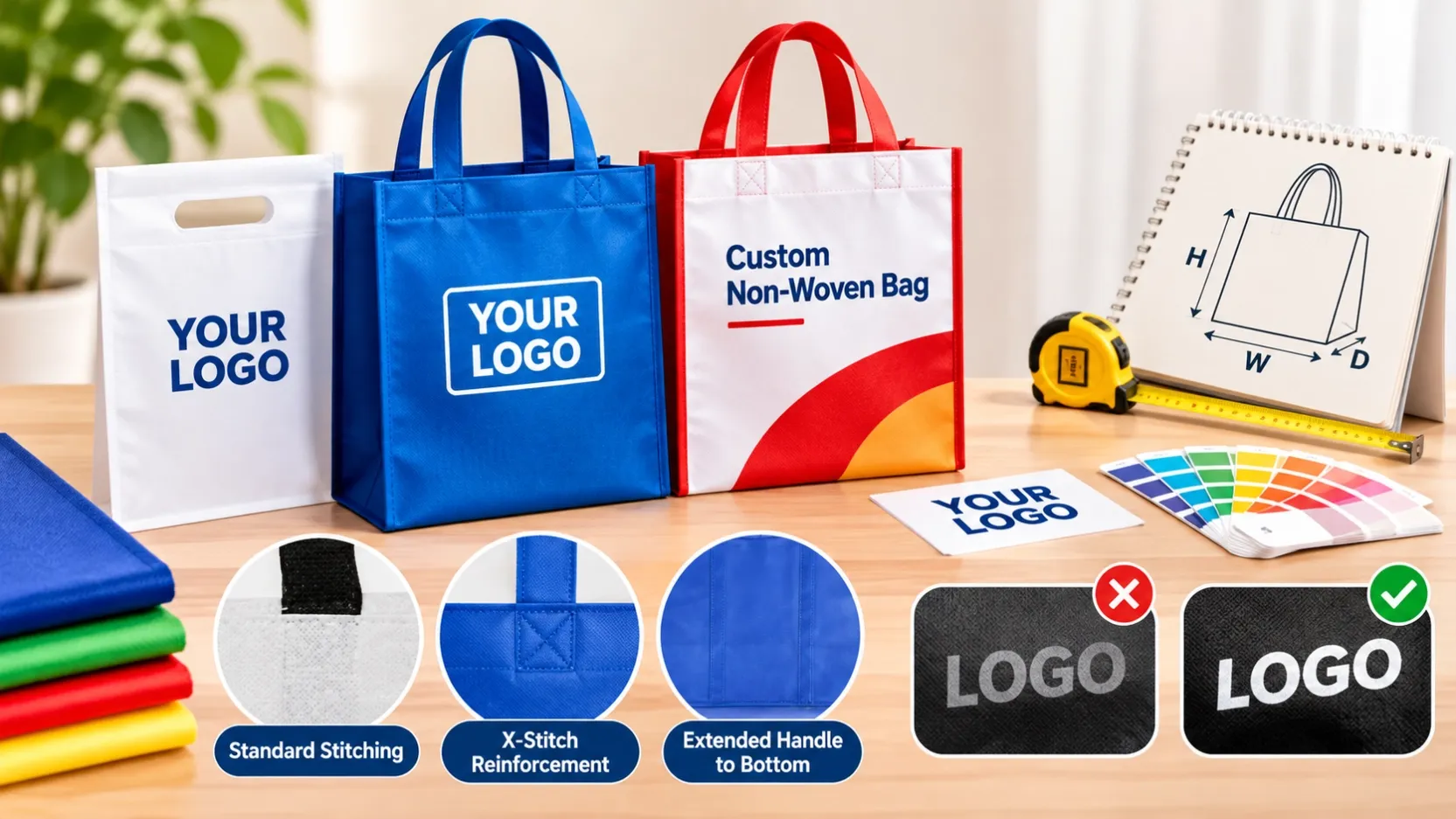
Ordering custom non-woven bags involves more than choosing a size and sending a logo. Bag dimensions, handle specifications, printing requirements and construction details all affect how the finished bags look and perform.
If these details are not confirmed before production, your bags may not fit the intended products, handles may be uncomfortable to carry, or printed designs may look different from what you expected.
These problems can often be avoided by checking the specifications before production.
Here are five common mistakes to avoid when ordering custom non-woven bags, along with practical tips to help you get your order right.
1. Ignoring the Gusset: Choosing a Bag That Doesn't Fit
One common mistake is choosing bag dimensions based only on width and height without considering the depth of the products.
A flat bag may work well for brochures, documents and flat merchandise, but it may not provide enough space for boxes, food containers or other three-dimensional items.
Choose the Right Bag Construction:
- Flat Bag: Suitable for documents, brochures and relatively flat products.
- Bottom Gusset Bag: Adds depth at the base, providing more room for products with some thickness.
- Side and Bottom Gusset Bag: Provides additional volume and is suitable for bulkier or box-shaped products.
Production Consideration: Before ordering, measure your products in their intended packed position. Consider the length, width and height of the items, as well as the required bag opening and gusset depth.
The usable internal space may differ from the stated bag dimensions due to seams, folds and construction details. Confirming these measurements in advance helps ensure a suitable fit.
2. Confusing Handle Length with Handle Drop Height
Handle specifications are another common source of misunderstanding.
The total handle length and finished handle drop height are two different measurements.
- Total Handle Length: The overall cut length of the handle material before attachment.
- Handle Drop Height: The vertical distance from the top edge of the bag to the inner top edge of the handle when the handle is raised.
The Solution: Specify Your Carrying Requirements
If you have no special handle requirements, the handles can be made according to the standard specifications for the selected bag style.
If you need a specific handle size, clearly confirm whether you are specifying the total handle length or the finished drop height.
Also consider whether the bag is intended for hand carrying or shoulder carrying, as this affects the required handle dimensions.
Confirming the measurement and carrying requirements before production helps avoid handles that are too short or unsuitable for their intended use.
3. Not Confirming the Expected Logo Color
The printed logo may not look exactly the same as it appears on your computer screen.
Fabric color and printing methods can affect the final appearance. This is particularly important when printing light-colored logos on dark non-woven bags.
The Solution: Confirm the Printing Effect in Advance
Send your logo or artwork to your supplier before production. The manufacturer can review the design and recommend a suitable printing method based on the bag material and your desired result.
If accurate color matching is particularly important, confirm the printing effect with a sample before approving bulk production.
4. Assuming Every Printing Method Allows Edge-to-Edge Coverage
Some buyers prepare artwork with colors or patterns extending all the way to the edges of the bag.
However, standard screen printing has practical limitations. The printable area may be affected by seams, folds, gussets, handles and the bag's construction.
The Solution: Choose a Suitable Printing Process
- Standard Screen Printing: Suitable for many logos and designs, but the printable area needs to be confirmed according to the bag structure and production setup.
- Laminated Non-Woven Bags: Can be a suitable option for designs requiring large printing areas, full-color graphics or extensive surface coverage.
For many laminated non-woven bags, BOPP film is printed first and then laminated onto non-woven fabric before the bags are converted into their final shape.
This process allows for a wider range of full-color designs than conventional screen printing.
Production Consideration: If your artwork requires extensive coverage or patterns close to the edges, send the design to your supplier for review before confirming the bag construction and printing method.
5. Overlooking Handle Reinforcement Options for Sewn Bags
Handle construction plays an important role in the durability and performance of sewn non-woven shopping bags.
Different handle attachment and reinforcement methods can be selected according to the bag design and intended use.
Common Handle Construction Options for Sewn Bags:
- Standard Stitching: A conventional method of attaching handles to the bag body for general applications.
- X-Stitch Reinforcement: Uses an X-shaped stitching pattern at the handle attachment points to provide additional reinforcement.
- Extended Handle Webbing to the Bottom: The handle webbing extends down along the bag body, sometimes reaching the bottom, helping distribute stress over a larger area depending on the construction.
These options are generally used for sewn non-woven bags. Heat-sealed bags use heat-sealed handle construction and do not use these sewn reinforcement methods.
Production Consideration: If you have no special requirements, the standard handle construction for the selected bag style is usually suitable for general applications.
For bags intended to carry heavier products or withstand frequent use, discuss the expected load and suitable handle construction with your supplier before production.
Your Pre-Order Checklist: Confirm These 5 Details
Before approving your custom non-woven bag order, check the following:
- Bag Dimensions: Have you confirmed the width, height and gusset according to your products?
- Handle Specifications: Have you clearly specified the total handle length or finished drop height?
- Logo Color: Have you confirmed the printing method and expected appearance?
- Printable Area: Is your artwork suitable for the selected printing process and bag construction?
- Handle Reinforcement: For sewn bags, have you considered whether standard stitching, X-stitch reinforcement or extended handle webbing is appropriate?
Taking time to confirm these details before production can help prevent avoidable specification errors and ensure that your finished bags meet your requirements.
Need Help with Your Custom Non-Woven Bags?
Choosing the right bag structure, handle specifications and printing method can make a big difference in the final result.
If you are planning a custom non-woven bag project, Contact us to help you review your requirements and find a suitable solution.