Sourcing Guides
How to Check Non-Woven Bag Quality: 5 Practical Tests
Learn 5 practical ways to check non-woven bag quality, from fabric and handle inspection to printing, carrying performance, and overall workmanship.
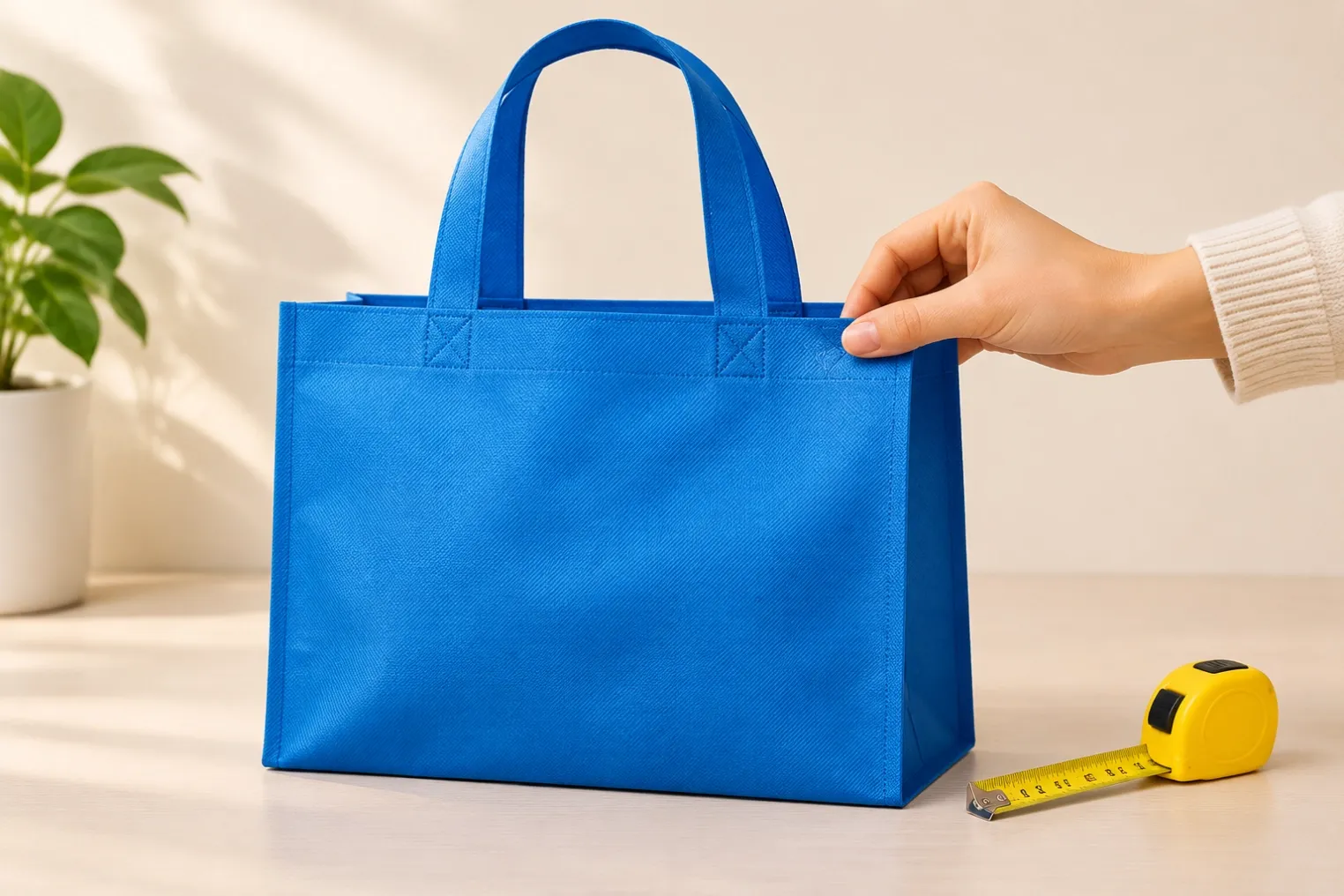
When sourcing non-woven bags for retail stores, supermarkets, promotional events, or everyday packaging, appearance alone is not enough to determine product quality.
Two bags may look almost identical in photos but perform very differently in actual use. Differences in fabric consistency, handle attachment, printing quality, and overall construction can affect durability and the customer's experience.
For buyers sourcing custom non-woven bags, inspecting a finished sample before approving bulk production is an important step.
In this guide, we share five practical ways to check non-woven bag quality and identify potential issues before placing a large order.
1. Check Fabric Quality and Consistency
The first step is to examine the non-woven fabric itself.
Start by looking at the fabric under normal lighting. Then, hold it against a light source to check whether the material appears reasonably consistent across the surface.
Pay attention to:
- Uneven fabric density or thickness.
- Visible holes, defects, or irregular surfaces.
- Areas that appear noticeably thinner than others.
- Differences in texture or appearance across the bag panels.
GSM (grams per square meter) indicates the weight of the fabric, but it does not determine the finished bag's carrying capacity on its own.
A higher GSM does not automatically mean a stronger bag. Material quality, bag construction, handle attachment, and workmanship also influence overall performance.
Practical tip: Compare the fabric across different areas of the finished sample rather than judging its quality by GSM alone. A visual light check can help identify obvious inconsistencies, but it cannot replace material strength testing.
2. Inspect Handle Attachment and Construction
Handles are among the most important areas to inspect because they experience repeated pulling and lifting during use.
Check the following:
- Whether the handles are securely attached.
- Whether the attachment areas are evenly finished.
- Whether the handle material is suitable for the intended application.
- Whether there are loose edges, weak bonding, or visible defects.
Different bag constructions require different inspection methods.
For stitched non-woven bags, pay attention to the stitching around the handle attachment points and whether the seams are consistent.
For heat-sealed bags, check whether the bonded areas are even and secure, without obvious gaps or weak spots.
Practical tip: Gently pull the handles by hand to check for obvious looseness or weak connections. This is a preliminary inspection, not a substitute for an actual carrying test.
3. Test Printing Quality and Adhesion
For custom printed non-woven bags, printing quality directly affects the final appearance of the product and how the customer's brand is presented.
Check:
- Whether the logo is clear and easy to recognize.
- Whether the printing position and alignment match the approved artwork.
- Whether the colors are consistent.
- Whether there are smudges, missing areas, or uneven ink coverage.
You can also perform a simple tape test as an initial screening method.
Apply a piece of suitable adhesive tape to a small printed area, press it down consistently, and peel it off. Check whether noticeable ink transfers onto the tape or whether the printed area shows visible damage.
This is a simple in-house check, not a standardized printing adhesion test. Results can vary depending on the tape, ink, printing process, and test conditions.
For important orders, the printing requirements and any agreed testing standards should be confirmed before production.
Practical tip: Always compare the finished sample with the approved logo artwork, including its size, position, colors, and overall appearance.
4. Perform a Practical Carrying Test
GSM alone cannot determine how much weight a finished non-woven bag can carry.
The most practical way to evaluate its carrying performance is to test a finished sample using suitable items that reflect the bag's intended use.
Gradually place the items inside the bag and observe how it performs under the expected load.
Pay attention to:
- Whether the handles stretch excessively.
- Whether the handle attachment points show signs of stress.
- Whether seams or heat-sealed areas begin to open.
- Whether the bag body stretches, tears, or becomes deformed.
Check the bag during and after the test.
The appropriate test load should be based on the bag's size, construction, and intended application, rather than GSM alone.
Practical tip: Use a consistent test method and record the results. This makes it easier to compare samples and evaluate whether the finished bag meets the agreed requirements.
5. Check Dimensions and Overall Workmanship
Finally, make sure the finished bag matches the agreed specifications.
Measure the sample and inspect its overall construction.
Check:
- Bag width and height.
- Side and bottom gusset dimensions, where applicable.
- Handle length and positioning.
- Consistency between the finished sample and approved specifications.
- Overall finishing, including edges, corners, stitching, and heat-sealed areas.
One detail worth confirming is whether the stated bag height includes or excludes the handles.
For accurate production, the measurement method should be clearly defined before ordering.
Even a well-made bag can cause problems if its actual dimensions do not match the buyer's requirements.
Practical tip: Compare the physical sample with the approved measurements and specifications instead of relying only on product photos or a quotation.
Before Approving a Bulk Production Order: 4 Things to Confirm
After checking the physical sample, buyers should also confirm the order details before authorizing mass production.
1. Final Product Specifications
Confirm the material, GSM, bag construction, dimensions, handle details, and any special requirements.
2. Colors and Printing Artwork
Approve the bag color, logo design, printing position, size, and colors. Make sure the final artwork matches the agreed requirements.
3. Sample Approval
Confirm that the final sample meets your expectations for appearance, construction, dimensions, and intended use.
Any requested changes should be communicated and agreed upon before bulk production begins.
4. Order Details
Double-check the order quantity, unit price, packaging requirements, production lead time, and shipping arrangements.
Having these details confirmed in writing helps reduce misunderstandings and unnecessary changes during production.
Final Thoughts
Checking non-woven bag quality does not have to involve complicated testing procedures.
A careful inspection of the fabric, handle attachment, printing, carrying performance, and overall workmanship can help buyers identify potential problems before placing a large order.
For custom non-woven bags, a finished sample should always be evaluated against the actual product requirements rather than relying on photos, GSM, or specifications alone.
At SHOPPING BAG CO., we believe good bag quality starts with understanding the material, construction, and intended use. Careful sample inspection and attention to production details help ensure that the finished bags meet the agreed requirements.
Looking for custom non-woven bags for your business?
Contact us to discuss your bag specifications, material options, printing requirements, quantities, and sample arrangements.
Let's find the right bag solution for your business.